
The end of the year is when most homeowners begin to consider renovations. After hosting families for the holidays and discovering potential plumbing issues to address, it’s the ideal time to plan your upcoming plumbing upgrades.
Our plumbers have decades of experience in guiding Victoria families on their plumbing renovation options. From replacing showers and baths to complete bathroom remodels, let’s explore the elements to consider when moving plumbing for your renovation.
Inspecting Your Existing Plumbing Layout
Before any demolition begins, plot the location of your current plumbing lines. by booking a professional plumbing inspection.
Supply lines, drains, vents, and cleanouts all influence the feasibility and cost of moving fixtures. For example, relocating a sink on the same wall may be relatively simple, but moving it to an island or across the room may require rerouting water lines through floors or joists and installing new venting systems.
A professional pre-project plumbing assessment will determine:
-
The direction and slope of existing drainage
-
The condition and material of your pipes
-
Locations of load-bearing walls that may restrict access
-
Whether there is adequate space for vent lines
-
Any outdated components that should be upgraded while the walls are open
This evaluation helps determine whether relocation is practical or if a modified layout can achieve the same goals at a lower cost with less disruption.
Plumbing Code Requirements
Municipal building codes and the B.C. plumbing code ensure safety, sanitation, and proper system performance. When relocating plumbing, compliance with local code is non-negotiable and affects nearly every part of the project.
The B.C. Plumbing Codes dictate:
-
Drain pipe sizes
-
Fixture spacing
-
Venting requirements
-
Maximum pipe lengths before you require venting
-
Proper slope for drain lines
-
Backflow prevention
-
Permitted materials
For example, a drain must maintain a specific downward pitch to allow proper flow. If a new fixture location doesn’t allow enough slope due to joist depth or room configuration, the move may require structural modifications or may not be feasible.
Working with a licensed plumber ensures every adjustment meets jurisdictional code and passes inspection.
Structural Limitations
Your home’s framing and support structure can significantly impact how far plumbing can be moved. Floor joists, beams, and load-bearing walls may limit the locations where pipes can safely run. While small holes may be an option for supply lines, drainage pipes with larger diameters require more clearance and cannot always pass through certain structural components without reinforcement.
Areas with concrete slabs present additional challenges. Moving plumbing in a slab-on-grade home may require trenching or jackhammering concrete, which increases both the cost and project time. Homeowners should factor this into their budgeting and design decisions.
Renovation Budget Implications
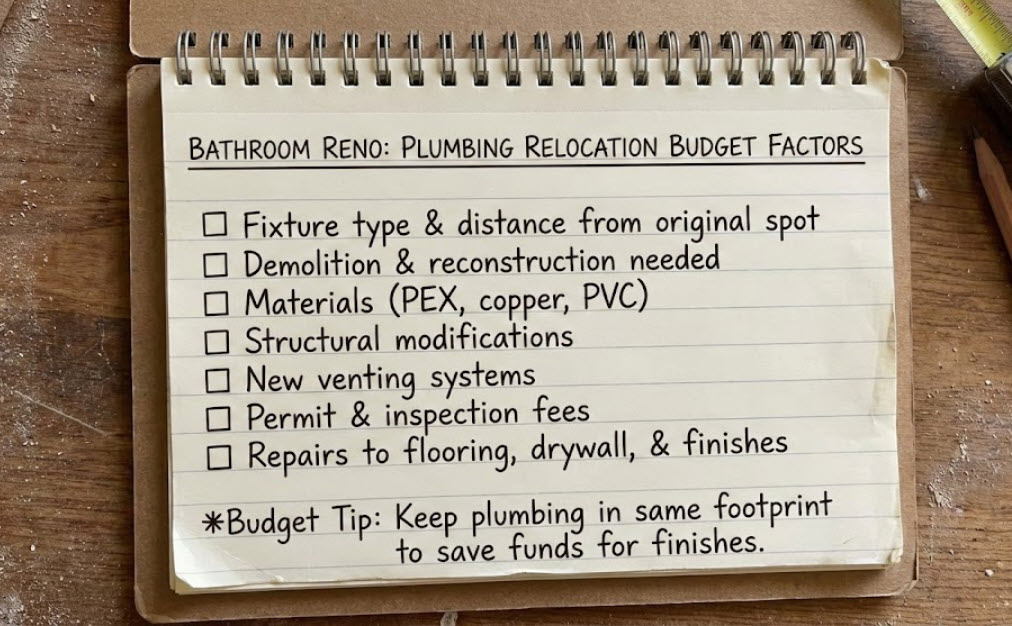
Plumbing relocation can turn a reasonably priced renovation into a more costly project.
Expenses depend on elements such as:
-
Fixture type and distance from original location
-
Required demolition and reconstruction
-
Materials needed (e.g., PEX, copper, PVC)
-
Structural modifications
-
New venting systems
-
Permit and inspection fees
-
Repairs to flooring, drywall, and finishes after installation
Generally, the farther a fixture moves from the existing plumbing stack, the higher the cost. When the budget is limited, adjusting the design to maintain plumbing in the same general footprint can preserve funds for finishes such as tile, countertops, or fixtures.
Long-Term Systems Functionality and Efficiency
Relocating plumbing doesn’t simply involve fitting a new layout. The remodel is also an opportunity to modernize your equipment. Older homes may contain galvanized steel pipes, inadequate venting, or inefficient layouts that cause low water pressure, slow drainage, or recurring clogs.
During a renovation, upgrades might include:
-
Replacing old supply lines with PEX or copper
-
Installing larger drain pipes to improve flow
-
Adding modern shutoff valves
-
Improving water heater efficiency with shorter runs
-
Optimizing venting to reduce gurgling and backup issues
These improvements add long-term reliability and help prevent future repairs, making them worthwhile while walls and floors are already open.
Water Pressure and Fixture Requirements
New plumbing locations may require updated supply lines to maintain proper pressure. Modern fixtures, such as rain showers, large tubs, filtered faucets, and smart appliances, often have specific pressure and volume needs.
A professional plumber will confirm:
-
Whether existing lines can support new fixture demands
-
If pressure regulators or upsized pipes are needed
-
Whether new appliance hookups meet manufacturer specifications
Ignoring pressure requirements can result in uneven water flow, water pressure losses, or shortened fixture lifespan.
Ventilation and Drainage Considerations
Vent systems are often overlooked by homeowners, but are essential for a healthy plumbing system. When you move a fixture, the venting configuration typically must move as well. Without proper venting, drains can become slow, gurgle loudly, or allow sewer gases into the home.
Some projects require additional venting options such as:
-
AAVs (Air Admittance Valves)
-
New vertical vent stacks
-
Horizontal vent run adjustments
-
Reconfiguring attic or roof penetrations
Drainage lines must maintain a minimum slope, so relocating them uphill or through tight framing can create previously unseen challenges.
Project Timeline and Coordination
The plumbing update is often a crucial element of the larger overall home upgrade. Your plumbers should coordinate with construction teams and electricians to ensure effective working schedules. During your bathroom renovation, remember that the plumbing relocation affects multiple phases of the project, including:
-
Demolition
-
Rough-in installation
-
Inspections
-
Drywall repair
-
Flooring installation
-
Final fixture installation
Plumbing work often determines when the next trades can begin. A clear timeline prevents delays that can add cost and frustration.
Risk of Hidden Plumbing Issues
Before removing fixtures or drilling into structural areas, prepare for the unexpected. Hidden plumbing problems can block your project’s progress and increase your costs. For example, Realtor.com found plumbing leaks are one of the most common hidden plumbing issues impacting home renovation plans.
Some of the most common causes of plumbing reno project delays include:
-
Leaks
-
Corrosion
-
Mold or rot near old plumbing
-
Improper DIY installations from previous owners
-
Undersized lines that were never upgraded
Addressing these issues immediately upon discovery will help ensure long-term safety and performance. A professional plumber can identify these problems early, during the pre-project camera inspection, and recommend cost-effective solutions.
The Data on Plumbing Renovations in British Columbia
-
Nearly half of Canadian homeowners say they have either recently completed or are planning home‑improvement projects.
-
Among the most popular renovation projects, updating or adding bathrooms is one of the most frequent types of upgrades nationwide.
-
Plumbing modifications (e.g., relocating water lines or drains) are regularly cited as among the most complex parts of a bathroom or kitchen remodel, especially when layout changes are involved.
Request Your Plumbing Renovation Quote from Thunderbird

Thunderbird Plumbing has master plumbers and project managers with decades of experience helping Victoria homeowners plan seamless renovations. Whether you’re considering a full-scale bathroom upgrade or moving a sink from one part of the room to another, Thunderbird Plumbing can help you navigate each phase of the upgrade process with professionalism and cost efficiency.
Request your plumbing renovation quote today by calling our dispatch team at 778-402-9431 to connect with our plumbers or by scheduling your quote online.
FAQs on Moving Plumbing for a Renovation Project
How hard is it to move plumbing during a renovation?
If fixtures are near existing supply/drain lines and walls are easy to open, moving plumbing is fairly straightforward. If you’re relocating plumbing across rooms, through concrete slabs, or rerouting drain/vent stacks, complexity increases quickly.
How much does it cost to relocate plumbing during a renovation?
Costs vary widely depending on the scope. A typical full bathroom plumbing relocation cost can range from CAD $3,400 to $16,200.
For smaller moves, such as shifting a sink or toilet a few feet, expect the following average price:
-
Sink: CAD $675–$1,620
-
Toilet: CAD $1,080–$3,375
-
Shower/tub: CAD $1,620–$5,400
If your house has a concrete slab or accessing lines requires breaking concrete, costs tend to be on the higher side of the range.
Do I need a licensed plumber or can a general contractor handle plumbing moves?
You should use a licensed plumber. Plumbing involves water pressure, drainage slopes, venting, and code compliance; mishandling any of these can lead to leaks, drainage problems, or code violations. Even if a general contractor coordinates the job, the actual plumbing work should be completed by a qualified tradesperson.
Do I need permits and inspections when moving plumbing?
In most municipalities, any change to supply lines, drains, or venting requires a permit and an inspection. This ensures the work meets local plumbing code standards and helps prevent future problems.
Can plumbing be moved if it’s under a concrete slab foundation?
Yes, but it’s more labor-intensive and therefore more costly. Plumbers may need to break through concrete, reroute pipes, then repair or repour concrete or subfloor, which significantly increases labour and material costs.
How long does a plumbing relocation typically take during renovation?
For a minor relocation (e.g., moving a sink or toilet a few feet), the actual plumbing work might only take a few hours. Major relocations, especially those requiring demolition, pipe rerouting, slab work, and venting changes, can take several weeks, plus time for inspections and finishing work (For example, drywall, flooring, etc.).
Will moving plumbing damage my walls or floors?
Moving plumbing usually involves cutting into walls, floors, or ceilings to access existing pipes or create new runs. After rerouting, drywall, flooring, or subflooring may need to be patched or refinished.
Can I move any fixture anywhere I want?
There are limitations. Drain pipes must maintain a proper slope toward the main stack, venting must be preserved or reconfigured, and structural or foundation constraints (old pipes, slab type, and joist layout, etc.) may restrict how and where plumbing can be rerouted.
What hidden problems might arise when relocating plumbing?
Common surprises include old or corroded pipes, outdated materials, poor previous installations, hidden structural issues, unexpected obstructions behind walls/floors, or even code‑compliance problems. Renovations sometimes uncover such issues, which can increase cost and complexity.
How do I know if the plumbing relocation is done correctly and to code?
A licensed plumber should adhere to local plumbing codes for slope, venting, materials, and pressure testing. After work is done, a municipal inspection (if required) or a professional pressure test should verify workmanship. Permits and documentation provide you with additional assurance and help avoid problems if you eventually sell your home.