
Sudden heavy rainfall can inundate your local sewer systems, causing water and sewage to flow back towards the home rather than toward the public sewers. Backwater valves help prevent sewage backups, protecting your home and preventing expensive structural damage. This post explains backwater valves, their role in home plumbing safety, and their installation process.
Where is a Backwater Valve Installed?
Plumbers usually install the backwater valve at the lower point within your home’s plumbing structure to prevent sewage from collecting and traveling through the sewer pipe back into the property. The valve has an arrow on the exterior pointing to the safe directional flow of the sewage.
How Does a Backwater Valve Work?
Backwater valves function via a small flap, usually in the open position, allowing water and sewer gases to exit the home. On either side of the flap is a flotation device, which causes the flap to lift and close if water or sewage flows back into the property. Gravity then allows the flap to fall back into the open position when the water and sewage recede.
What are the Main Reasons for Installing Backwater Valves?
Meeting Standards Set by B.C. Plumbing Codes
B.C. Plumbing Code, Article 4.6.4. requires the installation of a backwater valve on fixture drains
below the adjoining street level where the possibility of backflow into the local sewage system exists
You Live in a Flood Prone Area
The latest data from the Insurance Bureau of Canada shows that about 10% of Canadian homes are at high risk of flooding. If you live in an area at high risk of floods, a backwater valve can help prevent sewage from entering the house during the influx of water.
You Are Using a Sump Pump
Adding a backwater valve to homes with a sump pump is a backup measure in case the volume of water overwhelms the pump.
How Much Does it Cost to Install a Backwater Valve?
The cost to install a backwater valve in a B.C. home varies based on the property size, the labor required, and the valve style. The cost to install a valve varies between $1500 and $5000, based on these specific project elements. On average, homeowners will pay $2500 for flap-style backwater valve installation.
What Do I Need to Know Before Booking Backwater Valve Installation?
The Best Type of Valve for Your Home
There are two specific styles of backwater valves: flap-style valves and gate-style valves. Flap-style valves are generally more affordable, while gate-style valves may offer additional benefits such as greater flow control and sealing. Your plumber can help evaluate the plumbing structure and determine which valve best fits your home.
The Factors that Impact Installation Complexity
The complexity of the backwater valve installation project will depend on the following elements:
- The need for excavation and trenching
- The presence of trees and underground utilities
- The accessibility of the sewer line
- The size of the property
Your Plumber’s Experience with Backwater Valves
As with any plumbing project impacting the structure safety of the home, only experienced plumbers should complete backwater valve installation. When booking a plumber, ask them for references to customers who have had valve installation completed in their homes. Ask about the company’s installation project process. What do the steps involve? How can you help ensure the project moves forward seamlessly?
Book Backwater Valve Installation with Thunderbird Plumbing
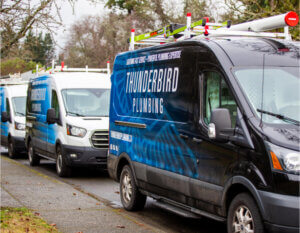
Thunderbird Plumbing is Victoria’s leader in backwater valve installation projects. We’ve completed projects throughout the city and Greater Victoria in Colwood, Oak Bay, and Saanich, ensuring complete plumbing safety and protecting local homes against sewage backflows.
If you want to learn more about your backwater valve installation options or book a project quote, call Thunderbird Plumbing’s team today at 250-514-404, and we’ll connect you with our licensed plumbers!